

Updated October 13, 2026
Meal prep for beginners: portions, calories, storage
By the CaloCalo team
Start with a few dependable components instead of a week of identical boxes. Portion calculations and a storage plan make meal prep more useful.
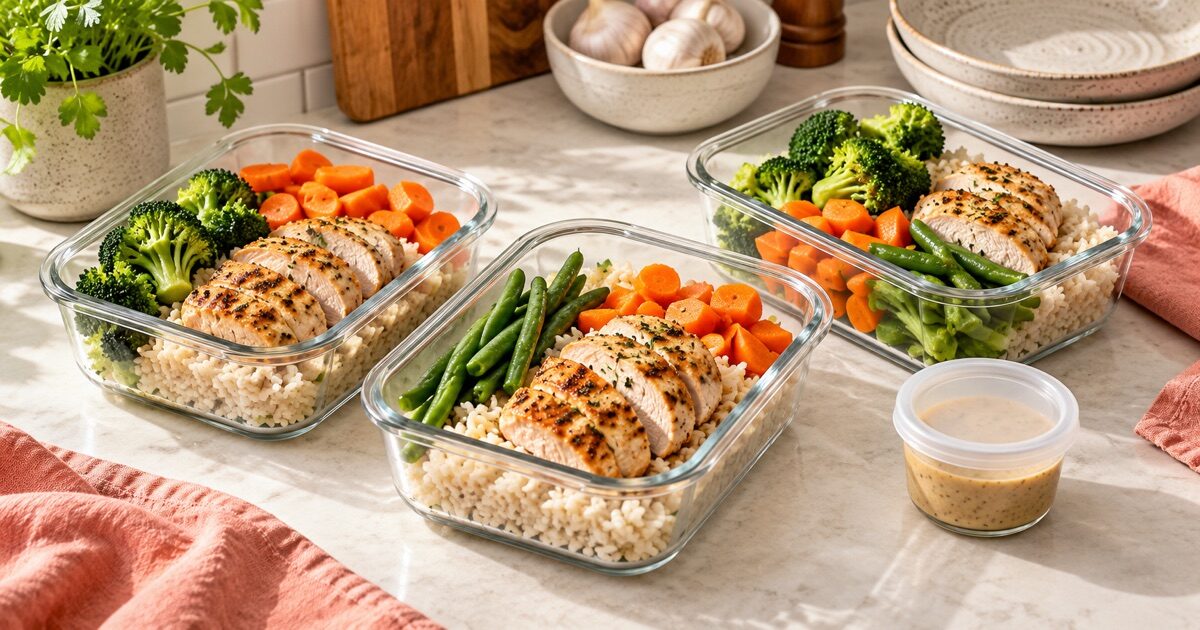
Useful meal prep combines a short menu, a repeatable portion method and a safe storage plan. You do not need to prepare every meal for the week. Solving two or three busy lunches can be enough to make the routine worthwhile.
Choose components before choosing containers
Pick one carbohydrate base, one or two protein foods, and vegetables you enjoy after reheating. For example, rice, chicken or tofu, carrots and greens can be assembled in different proportions. Keep sauces separate when that improves texture or makes portions easier to adjust.
| Component | Examples | Planning decision |
|---|---|---|
| Carbohydrate | Rice, noodles or potatoes | How many portions will you actually eat? |
| Protein | Chicken, fish, tofu or beans | Which option fits each meal? |
| Vegetables | Carrots, greens or broccoli | Which keep the texture you like? |
| Sauce and fat | Dressing, oil or nut sauce | Included in the recipe or recorded separately? |
Write down which meals will be eaten soon and which will be frozen. That decision should happen before cooking a large quantity. The number of empty containers is not a useful guide to how much food you need.
Divide the energy by the food, not the box
Suppose a finished mixed dish contains an estimated 1,800 kcal and weighs 1,200 g. A 300 g serving is one quarter of the batch, so it contributes 450 kcal. A 400 g serving contributes 600 kcal. These are arithmetic examples and assume the ingredients are evenly distributed.
For separate components, weigh and divide them separately. A box with extra chicken and less rice may not have the same nutrition as another box of equal total weight. The raw and cooked weighing guide explains the batch method in more detail.
Keep storage food-specific
The FoodSafety.gov storage chart uses a refrigerator temperature of 4°C or below and gives many cooked leftovers a 3–4-day limit. Follow the entry for the actual food, not a blanket rule for all meal-prep boxes.
For rice, the UK Food Standards Agency advises cooling quickly, ideally within an hour, refrigerating for no more than a day before reheating, and reheating only once until steaming throughout. Freeze suitable portions promptly if keeping them longer. Do not leave the whole pot sitting out to cool.
Change one component when you want variety
Try tofu in tomato sauce with one lunch and chicken with herbs in another. Keep the portion method consistent while changing flavor. You can also prepare components without assembling the final box until needed, provided they are stored safely.
Use the Vietnamese food chart to find familiar starting meals. A home recipe can differ from the reference dish, particularly in rice, oil and sauce. Record your actual ingredients instead of forcing every lunch into the same generic entry.
Review the meal after eating it
Did you finish it, leave some, or add something at work? In CaloCalo, adjust the logged portion to reflect that. If the meal consistently leaves you hungry or contains more than you want, change the next batch. The best preparation plan is one that fits your appetite, facilities and schedule.
Sources
Common questions
Do all meal-prep boxes need the same calories?
No. You can vary portions for different appetites or schedules. If the boxes differ, calculate the amount of each component rather than dividing the total by the number of boxes automatically.
Can I keep a full week of cooked lunches in the fridge?
Do not assume every food keeps for a week. Check food-specific storage guidance and freeze suitable portions promptly when they will not be eaten within the recommended refrigerated period.
Should the weight of the container be included?
No. Tare the empty container or subtract its weight. The portion calculation uses the edible food weight, not the box and lid.
Keep reading
Weigh food raw or cooked? How to log meals correctly
Either method can work. The crucial step is matching the state of the food on your scale to the state described in the food entry.
Plant protein: build a filling Vietnamese-style meal
A vegetarian meal needs more than removing meat. Choose a protein component first, then build around rice, vegetables and the flavors you enjoy.
Protein breakfast ideas for busy mornings
Choose a protein food, add a familiar carbohydrate and include fruit or vegetables. A useful breakfast can be simple enough to repeat on a workday.