

Updated October 13, 2026
Plant protein: build a filling Vietnamese-style meal
By the CaloCalo team
A vegetarian meal needs more than removing meat. Choose a protein component first, then build around rice, vegetables and the flavors you enjoy.
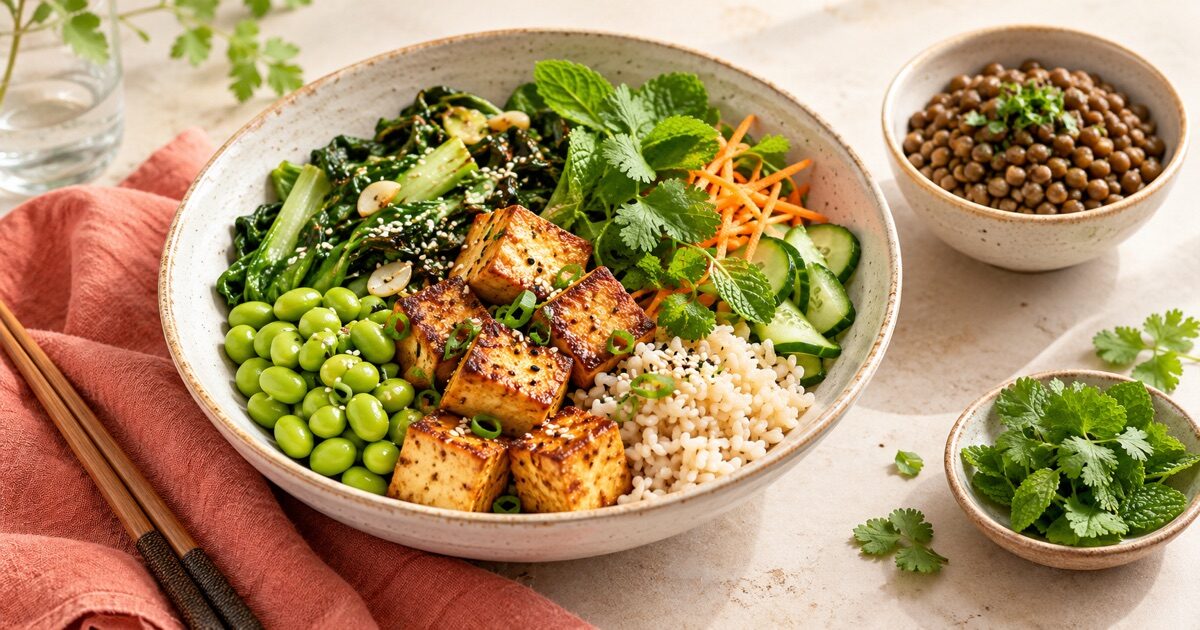
To build a plant-based meal with a meaningful protein component, choose foods such as tofu, beans, lentils or other soy foods before adding the rest of the plate. Simply removing meat from a rice-and-vegetable meal may leave the protein portion much smaller than intended.
Choose a protein food, not just a meat-free label
The NHS vegetarian guide identifies pulses, tofu and other alternatives as useful protein sources and encourages variety. Vegetarian dishes differ substantially: tofu with vegetables, mushroom broth and plain rice are not interchangeable just because all can be made without meat.
Decide whether you eat eggs or dairy as well. Those foods can fit a vegetarian pattern but not a vegan one. When eating out, also ask about fish sauce or animal-based broth if avoiding animal ingredients matters to you.
Build around familiar flavors
| Protein component | Meal idea | What to check |
|---|---|---|
| Firm tofu | Tofu in tomato sauce with rice and greens | Tofu portion and cooking oil |
| Beans or lentils | Bean stew with rice and a vegetable side | Cooked or drained weight |
| Edamame and tofu | Rice bowl with cucumber and herbs | Actual amount of each protein food |
| Tempeh | Tempeh with noodles and stir-fried vegetables | Marinade and added oil |
Keep the seasonings that make the meal enjoyable: ginger, garlic, chili, herbs, tomato or lime can change a familiar base. If you use a ready-made sauce, check its ingredients and portion. A vegetarian label does not tell you how much salt, sugar or oil it contains.
Calculate protein from your own product
Suppose a tofu label gives 12 g protein per 100 g. A 150 g portion provides 18 g. A soy drink labeled 3.2 g protein per 100 ml provides 8 g in 250 ml. Together, those hypothetical portions provide 26 g. This is an example of label arithmetic, not a claim about all tofu or soy drinks.
Use the portion calculation guide and the FDA's label explanation to compare products on the same basis. A “per pack” number and a “per 100 g” number cannot be compared directly without checking the pack weight.
Check the rest of the meal too
Protein is only one part of planning a vegetarian diet. The NHS also highlights nutrients such as iron and vitamin B12. If you avoid all animal foods, plan reliable B12 sources and seek individualized advice when needed; increasing tofu alone does not address every nutrient.
For everyday meals, keep carbohydrate foods, vegetables and a suitable amount of fat alongside the protein component. Read the fiber guide if beans and wholegrains are new to your routine, and increase changes at a comfortable pace.
Log the cooked meal you actually eat
The Vietnamese food chart can orient you, but a meat-based dish is not an exact match for its tofu version. In CaloCalo, check the recognized ingredients after a photo scan. Correct the tofu portion and cooking method, and include sauce or oil when it is missing from the entry.
Sources
Common questions
Does every vegetarian meal have enough protein?
No. A meal of rice and vegetables may need a more substantial protein component. Look at the ingredients and portions rather than relying on the vegetarian label.
Are all types of tofu nutritionally identical?
No. Water content, firmness, ingredients and preparation differ. Use the label for your tofu, and account for frying oil or sauce separately when needed.
Can plant drinks replace milk gram for gram?
Not automatically. Their protein content and added vitamins or minerals vary. Compare the actual nutrition label and fortification rather than assuming every plant drink is equivalent.
Keep reading
How much protein per day? A guide for active adults
Protein needs depend on context. Here is how to read a grams-per-kilogram recommendation and translate it into food you already eat.
How much fiber per day? Build it into everyday meals
Fiber deserves attention alongside calories and protein. Start with one meal, use the label when available, and increase gradually.
Meal prep for beginners: portions, calories, storage
Start with a few dependable components instead of a week of identical boxes. Portion calculations and a storage plan make meal prep more useful.