

Updated October 13, 2026
Weigh food raw or cooked? How to log meals correctly
By the CaloCalo team
Either method can work. The crucial step is matching the state of the food on your scale to the state described in the food entry.
You can weigh food raw or cooked, as long as the nutrition entry describes the same state. Weighing cooked rice and selecting dry rice is a much bigger problem than choosing either method consistently.
Why the weight changes during cooking
Rice and pasta absorb water, while meat often loses water and sometimes fat. The USDA cooking-yield tables document changes in weight, moisture and fat for prepared meats. A finished food can therefore have a different calorie value per 100 g without cooking somehow creating energy.
There is no single raw-to-cooked multiplier that works for every food. Even two batches of rice can finish at different weights. Use the entry that fits the food, or calculate a batch from the ingredients you used.
A complete rice-batch example
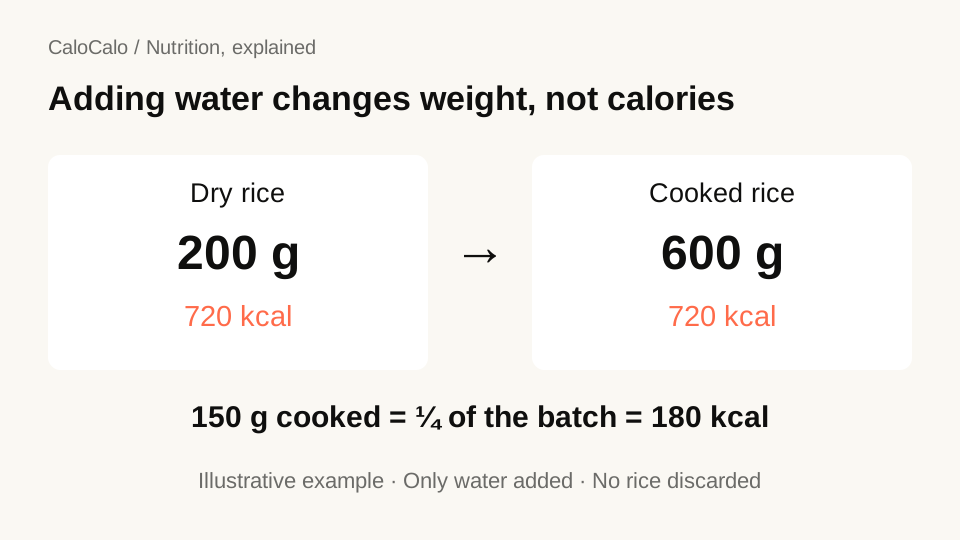
Suppose a dry-rice label lists 360 kcal per 100 g. You cook 200 g using only water, and the finished batch weighs 600 g. Assuming no rice is discarded, the batch contains 720 kcal. Water increased its weight without adding calories.
| Step | Calculation | Result |
|---|---|---|
| Dry batch energy | 200 ÷ 100 × 360 | 720 kcal |
| Cooked energy per gram | 720 ÷ 600 | 1.2 kcal/g |
| 150 g cooked portion | 150 × 1.2 | 180 kcal |
If you entered that 150 g cooked portion as 150 g dry rice, the app would show 540 kcal. The arithmetic would be correct for the wrong food state. That is why checking the word “cooked” matters more than adding precision to the scale.
Apply the same method to a recipe
Add up the energy of all ingredients, including cooking oil and sauces. Weigh the finished edible batch without the pot. Then use portion calories = recipe calories × portion weight ÷ finished batch weight. Stir or divide ingredients evenly so each serving reasonably resembles the whole recipe.
A 1,200-kcal recipe weighing 800 g would provide about 300 kcal in a 200 g portion. This assumes an even distribution. A portion containing most of the meat or oil will differ. If substantial fat or cooking liquid is discarded, a suitable cooked-food entry may be more practical than assuming every ingredient remains in the meal.
Keep one record for what you ate
Log the ingredient recipe or the prepared dish, not both. Use the oil guide for shared cooking fats and the label guide for serving calculations. If you eat only part of a plate, adjust the portion rather than recording everything served.
For restaurant meals, weighing every ingredient is usually impossible. Use the Vietnamese food chart or a CaloCalo photo estimate as a starting point, then correct obvious differences in rice, meat, toppings or sauce. Consistency is useful even when exact recipe details are unavailable.
Sources
Common questions
Is weighing raw food always more accurate?
Not automatically. It is convenient when using raw ingredient labels. Cooked weighing can work with a matching cooked entry or a batch calculation. A mismatched entry is the bigger problem.
Can I use one conversion factor for all cooked rice?
No. Rice variety, cooking method and water absorption change the finished weight. Weigh your own batch if you want to calculate its portions.
Should I weigh bones, peel and packaging?
Match the edible portion described in the food record. Remove packaging and account for inedible parts rather than logging their weight as food you ate.
Keep reading
Calories vs kcal: how to read food energy labels
A food label showing 200 kcal means 200 dietary calories. The next thing to check is how much food that number describes.
Dietary fat and calories: how to count oils and nuts
Fat is part of a balanced diet and a concentrated source of energy. Measuring a familiar cooking habit can be more useful than banning an ingredient.
How much protein per day? A guide for active adults
Protein needs depend on context. Here is how to read a grams-per-kilogram recommendation and translate it into food you already eat.