

Updated October 13, 2026
Protein breakfast ideas for busy mornings
By the CaloCalo team
Choose a protein food, add a familiar carbohydrate and include fruit or vegetables. A useful breakfast can be simple enough to repeat on a workday.
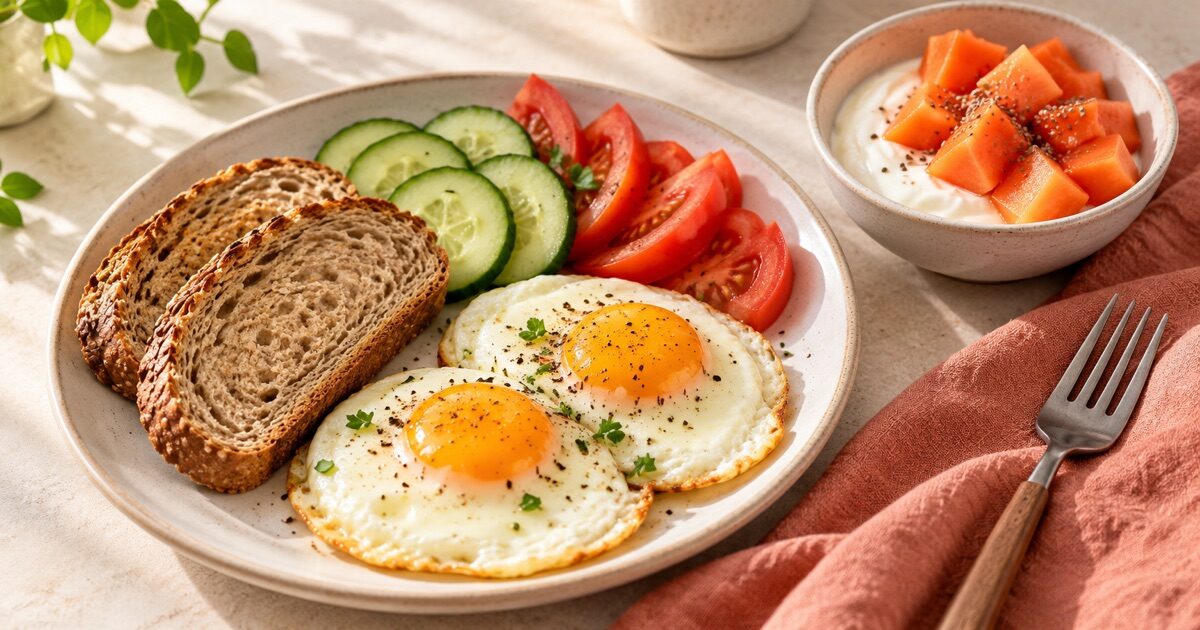
A practical protein breakfast starts with a recognizable protein food, then adds enough other food to make a meal that fits your morning. Eggs with bread, yogurt with oats, or tofu with rice can all work. There is no single breakfast that everyone needs to copy.
Start with the meal you already eat
If breakfast is usually bread and coffee, consider whether an egg, yogurt or another protein food would fit; the banh mi chart shows how much protein common fillings already add. If you normally eat pho, look at the meat portion rather than assuming a large bowl automatically means a high-protein meal. Small changes to a familiar routine are easier to evaluate than replacing everything at once.
The daily protein guide explains how training and other circumstances affect the bigger picture. The NIH sports nutrition resource places protein within overall nutrition; it does not make a particular breakfast product essential.
Five combinations to adapt
| Starting meal | Protein component | Other ingredients |
|---|---|---|
| Toast plate | Eggs | Wholegrain bread, tomato, cucumber |
| Yogurt bowl | Plain yogurt | Oats and fresh fruit |
| Rice bowl | Tofu or fish | Rice and cooked vegetables |
| Pho | Beef, chicken or tofu | Noodles, broth and herbs |
| Overnight oats | Milk or a suitable soy drink | Oats, fruit and optional nuts |
These are ingredient combinations, not recipes with measured nutrition. Choose portions that suit you. Yogurts and plant drinks vary considerably, so a food name on the front of a package is not enough to establish its protein content.
Check one breakfast with a label calculation
Imagine a yogurt containing 8 g protein per 100 g. A 170 g serving provides 13.6 g protein. If your chosen serving of oats contributes another 4 g according to its label, those two ingredients provide 17.6 g together. These are hypothetical label values; use your products for the real calculation.
The FDA label guide explains how nutrition figures relate to serving size. Count toppings separately when they are not included in the entry. Honey, nuts and a spoonful of nut butter change the meal even if the yogurt portion stays the same.
Make the convenient version the default
Decide what can be prepared ahead and what can be assembled quickly. Keep the ingredients for one or two breakfasts available instead of planning a different recipe every morning. Follow storage instructions for perishable foods, especially when taking breakfast to work.
If an early meal is uncomfortable or your schedule starts later, adapt meal timing to your situation. Adding breakfast solely to meet an online rule can create a routine that does not suit you. Medical instructions about meals or medication take priority over a general meal idea.
Review the whole breakfast
Use the Vietnamese food chart for familiar dishes and the calorie calculator for a rough daily starting point. When logging a photo in CaloCalo, check the bread, protein food, cooking fat and drink. The useful result is a breakfast you can prepare, enjoy and record consistently.
Sources
Common questions
Does every breakfast need 30 g of protein?
No. A suitable amount depends on your daily needs and meal pattern. Thirty grams is a possible planning choice, not a requirement for every person or every morning.
Can pho be a protein-containing breakfast?
Yes. The meat or tofu contributes protein, but the amount depends on the actual portion. Noodle and broth volume alone do not tell you how much protein is in the bowl.
Do I need a protein shake with breakfast?
Not necessarily. Eggs, dairy foods, tofu, beans and other ordinary foods can contribute. A shake is a convenience option, not a compulsory part of breakfast.
Keep reading
How much protein per day? A guide for active adults
Protein needs depend on context. Here is how to read a grams-per-kilogram recommendation and translate it into food you already eat.
Plant protein: build a filling Vietnamese-style meal
A vegetarian meal needs more than removing meat. Choose a protein component first, then build around rice, vegetables and the flavors you enjoy.
Balanced snack ideas: portions that fit your day
A snack can bridge a long gap between meals or simply be something you enjoy. Match the choice and portion to the situation instead of a universal rule.