
Updated October 13, 2026
Balanced snack ideas: portions that fit your day
By the CaloCalo team
A snack can bridge a long gap between meals or simply be something you enjoy. Match the choice and portion to the situation instead of a universal rule.
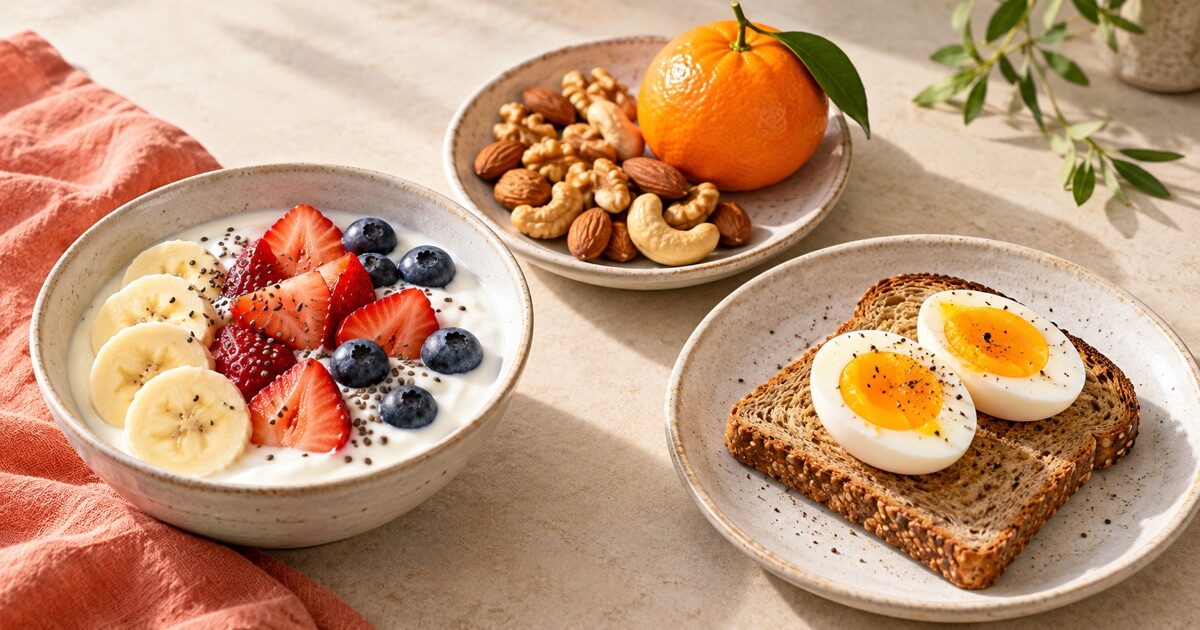
A useful snack is one that fits your appetite, schedule and overall eating pattern; it does not need to meet a universal calorie limit. You might want something portable before a late dinner, or a small food you enjoy with a break. Those are different situations and can call for different portions.
Decide what the snack needs to do
Ask how long it is until your next meal and what is practical where you are. A refrigerated yogurt may suit an office with a fridge, while fruit and a portion of nuts may travel more easily. A snack cannot be useful if it regularly stays uneaten in your bag.
Notice whether a planned snack helps your routine or simply duplicates food you did not want. Some days you may need one; other days you may not. If a medical plan specifies meals or snacks, follow that individualized guidance.
Build a short list of dependable options
| Option | What to prepare | What to check |
|---|---|---|
| Yogurt and fruit | A chosen yogurt plus fresh fruit | Yogurt portion and added toppings |
| Egg and toast | Cooked egg with bread | Bread size and any spread |
| Fruit and nuts | Whole fruit and a portion of nuts | The amount taken from the packet |
| Soy drink and oats | A suitable drink with a small oat portion | Protein content and serving units |
| Vegetables and bean dip | Prepared vegetables with a dip | Dip ingredients and storage needs |
These are alternatives, not a list to eat all at once. Choose combinations that fit your preferences and allergies. Fruit, vegetables, pulses and wholegrains can help add fiber; the NHS fiber guide provides context for that part of meal planning.
Read the packet before comparing numbers
The FDA label guide explains that nutrition values refer to the stated serving. One bar may be one serving, while another package contains two. Compare like with like rather than assuming the largest number on the label describes the whole packet.
For a hypothetical snack labeled 500 kcal per 100 g, a 25 g portion provides 125 kcal. Pairing it with another food whose chosen serving provides 80 kcal would make 205 kcal. That is an arithmetic example, not a target or measured value for the pictured snacks.
Make portions easy to notice
If you tend to eat from a large bag while working, putting some food in a bowl can make the amount easier to record. NIDDK's portion guide distinguishes the amount you choose to eat from the serving printed on a package. You are allowed to choose a different amount; just scale the entry accordingly.
Check dips, spreads and drinks too. A small snack with a large sweetened coffee is a different combination from the same snack with water. The café drink guide helps identify those additions without guessing from the cup's name alone.
Look for patterns instead of perfect snack choices
In CaloCalo, record the snack you ate and review how it fits around meals. If you frequently need food soon after lunch, check the lunch's portions and composition as well. The Vietnamese food chart and breakfast ideas offer starting points. You can improve a recurring pattern without turning each snack into a nutrition exam.
Sources
Common questions
Do I need a snack every day?
No. Some people prefer three meals; others find a snack useful between widely spaced meals. Appetite, activity and any medical meal instructions matter more than a universal schedule.
Must a snack stay below 100 calories?
No. There is no single calorie cap that fits every person or situation. A snack before a late dinner may serve a different purpose from something eaten shortly after lunch.
Are protein bars always better than ordinary snacks?
No. Compare portion size, ingredients, protein, fiber, taste and convenience. A bar may be useful, but its name does not automatically make it a better choice than regular food.
Keep reading
Protein breakfast ideas for busy mornings
Choose a protein food, add a familiar carbohydrate and include fruit or vegetables. A useful breakfast can be simple enough to repeat on a workday.
Bubble tea and Vietnamese coffee calories
A bubble tea can be as much as a meal, and Vietnamese iced coffee is light or heavy depending on the condensed milk. Measured numbers, and how to estimate your own cup.
How much fiber per day? Build it into everyday meals
Fiber deserves attention alongside calories and protein. Start with one meal, use the label when available, and increase gradually.