
Updated October 13, 2026
Bubble tea and Vietnamese coffee calories
By the CaloCalo team
A bubble tea can be as much as a meal, and Vietnamese iced coffee is light or heavy depending on the condensed milk. Measured numbers, and how to estimate your own cup.
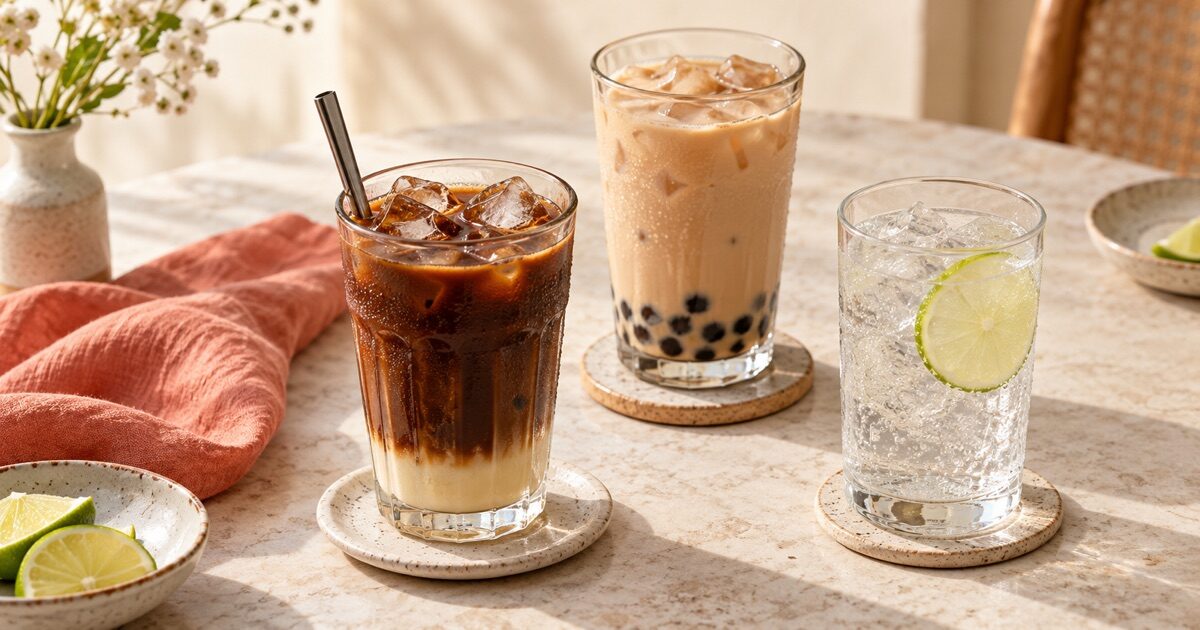
A cup of bubble milk (fresh milk with tapioca pearls, about 295 g) comes to roughly 425 calories, close to a meal. Egg coffee is about 230 calories for an 80 g cup, coconut coffee about 185, and in Vietnamese iced coffee every 10 g of condensed milk adds about 34. Milk tea recipes vary from shop to shop, so count the complete drink: the base, milk or creamer, sweetener and toppings.
Calories in common Vietnamese drinks
These numbers come from the Vietnamese food composition tables that CaloCalo uses as its database. The serving column is the weight of one cup as it was weighed for analysis; figures are rounded.
| Drink | Calories / cup | Calories / 100 g | Serving |
|---|---|---|---|
| Ca phe dua (coconut coffee) | 185 | 79 | 230 g |
| Ca phe trung (egg coffee) | 230 | 286 | 80 g |
| Nuoc mia (sugarcane juice) | 260 | 80 | 325 g |
| Yogurt with tapioca pearls | 270 | 121 | 225 g |
| Bubble milk (fresh milk with pearls) | 425 | 144 | 295 g |
Milk tea with pearls and Vietnamese iced coffee aren’t in the tables as separate drinks. Bubble milk is the closest to milk tea. For iced coffee, phin-brewed coffee has almost no calories, so count the condensed milk: about 335 calories per 100 g. A glass with 20 g of it is about 67 calories; with 30 g, about 100. Condensed milk is also about 54% sugar by weight, so 30 g adds roughly 16 g of sugar to the cup.
Check four details before choosing an entry
Start with cup size, milk type, sweetness setting and toppings. For Vietnamese coffee, ask whether the recipe includes condensed milk, fresh milk or another addition. For milk tea, note whether pearls, pudding, cream or other toppings are already included in the listed nutrition.
The CDC's guide to sugar includes sweetened coffee and tea among drinks worth checking. It also suggests unsweetened options when reducing added sugar. That choice is separate from estimating the energy of the drink you actually ordered.
Why half sugar is not half the calories
Consider this invented recipe to illustrate the math. The numbers are not a nutrition claim about any café or the drinks in the cover image.
| Component | Original recipe | Half the added syrup |
|---|---|---|
| Milk/creamer base | 160 | 160 |
| Pearl topping | 120 | 120 |
| Added syrup | 80 | 40 |
| Total | 360 | 320 |
Halving the syrup removes 40 kcal in this example, not 180. A café's “50% sugar” setting may not even correspond to exactly half the syrup energy, so use its information when available. Do not apply this fictional total to every cup.
Scale bottled drinks to the amount consumed
If a hypothetical bottle lists 45 kcal per 100 ml, drinking 300 ml provides 135 kcal. Drinking only 200 ml provides 90 kcal. The FDA label guide explains why the reference serving must be checked before using the number.
For a café drink, the cup's nominal volume may include ice, so it is not always the liquid volume used by a per-100-ml entry. A matched whole-drink entry can be more practical. Avoid adding the same topping twice if the chosen entry already includes it.
Choose one adjustment if you want a different drink
You might prefer a smaller size, less syrup, fewer toppings or an unsweetened version. Change the part that matters to you while keeping the order enjoyable. Replacing dairy with a plant drink does not automatically reduce calories; recipes differ.
For home coffee, weigh or measure the milk and sweetener a few times to understand your usual recipe. Keep the package values handy so you can repeat the estimate without rebuilding the calculation every morning.
Record drinks alongside meals
Use the Vietnamese food chart for the meal and log its accompanying drink separately when needed. In CaloCalo, check the detected beverage, cup size and toppings after a photo. See the restaurant tracking guide when recipe details are unknown. A consistent estimate is useful; a generic number presented as exact is not.
Sources
- Vietnamese Food Composition Table, National Institute of Nutrition (Ministry of Health, Vietnam)
- CDC — Be Smart About Sugar
- FDA — How to Understand and Use the Nutrition Facts Label
Common questions
How many calories are in bubble tea?
The Vietnamese food composition tables don’t measure milk tea with pearls separately. The closest drink is bubble milk (fresh milk with tapioca pearls): about 425 calories for a 295 g cup. A café bubble tea can be more or less depending on size, creamer, syrup and toppings.
How many calories are in Vietnamese iced coffee?
Phin-brewed coffee has almost no calories; the energy comes from the sweetened condensed milk, about 34 calories per 10 g. A glass with 20 g of condensed milk is about 67 calories, and one with 30 g about 100.
Does 50% sugar mean 50% of the calories?
No. It usually changes one part of the recipe. Milk, creamer, pearls and other toppings can still contribute energy, and the shop may define sweetness levels differently.
Can I use the same calorie entry for every milk tea?
Not reliably. Size, recipe and toppings differ. Use the shop’s information when available or choose the closest entry and adjust the components you know.
Does a zero-added-sugar drink necessarily have zero calories?
No. Ingredients such as milk can contain energy and naturally occurring sugars even when no extra sugar is added. Check the complete nutrition information.
Keep reading
How to track calories when eating out
Restaurant tracking works best as an informed estimate. Notice the meal components, record what you ate and keep the uncertainty in perspective.
Calories vs kcal: how to read food energy labels
A food label showing 200 kcal means 200 dietary calories. The next thing to check is how much food that number describes.
Balanced snack ideas: portions that fit your day
A snack can bridge a long gap between meals or simply be something you enjoy. Match the choice and portion to the situation instead of a universal rule.