
Updated October 13, 2026
How to track calories when eating out
By the CaloCalo team
Restaurant tracking works best as an informed estimate. Notice the meal components, record what you ate and keep the uncertainty in perspective.
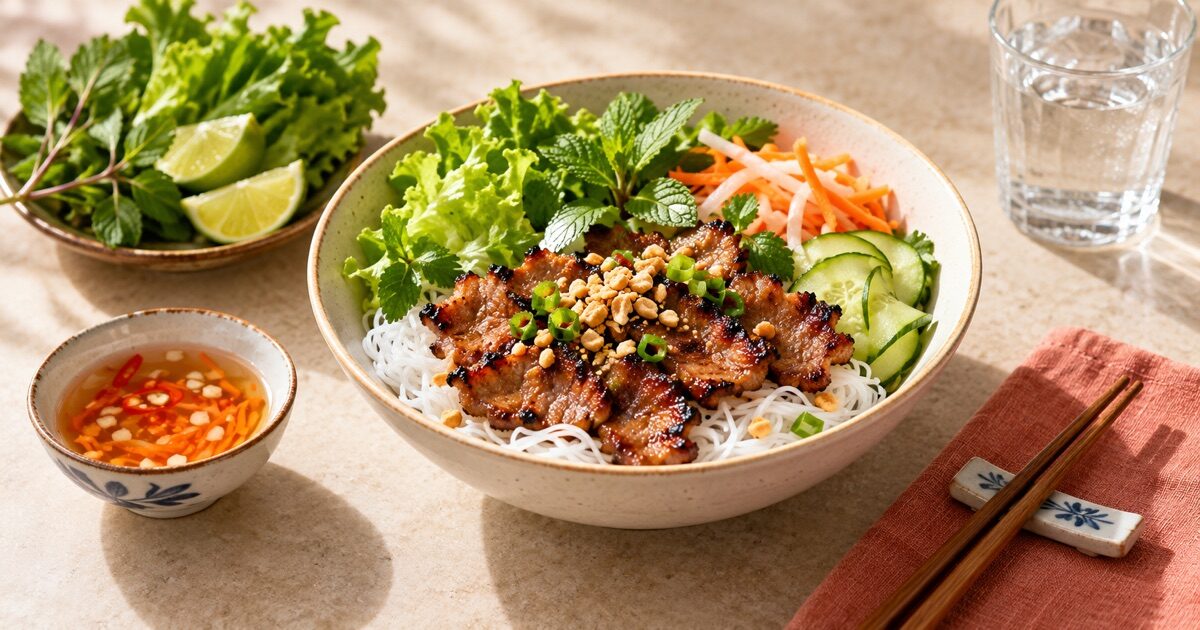
To track a restaurant meal, start with a sensible estimate of the main components and adjust it to what you actually eat. You do not need to know the kitchen's exact recipe for a record to be useful, but the final number should not be mistaken for a measurement.
Look for a close match before inventing a number
Use the restaurant's own nutrition information when available, making sure it describes the same size and preparation. Otherwise choose a food entry that resembles the dish. A grilled rice plate and fried rice may share ingredients but differ in preparation and added fats.
The Vietnamese food chart and the guides to pho, bun and banh mi give reference points. Compare the assumed portion with the bowl or plate in front of you before saving an entry.
Break the meal into visible parts
| Meal | Main components | Easy-to-miss additions |
|---|---|---|
| Rice plate | Rice, meat or tofu, vegetables | Scallion oil, glaze, fried egg |
| Noodle bowl | Noodles, protein food, herbs | Peanuts, dressing, fried toppings |
| Banh mi | Bread, filling, vegetables | Pâté, mayonnaise, butter |
| Soup noodles | Noodles, meat or tofu, broth | Extra fat, sauces, fried dough |
You can either use an appropriate prepared-dish entry or estimate from components. Avoid logging both the complete dish and its ingredients, which would count the same food twice. If the prepared entry already includes a fried egg, only add another egg when you actually ordered an extra.
Remember that served and eaten are different
NIDDK distinguishes a portion from a labeled serving and discusses restaurant portions. Your record should describe your portion, which might be less than the amount served. Leaving some rice or sharing a starter changes what you ate, not the restaurant's original plate size.
For a shared dish, estimate your fraction and then consider its composition. Eating one third of the plate's weight is not necessarily one third of its energy if your share contains most of the meat or sauce. An approximate component record can be more useful in that situation.
Use a photo as a starting observation
Take a clear picture before eating, with the whole plate visible. In CaloCalo, review the identified foods and portions. Mention or add known ingredients that are hard to see, such as a rich dressing or an extra side. Update the amount if you leave part of the meal.
A menu description, receipt or memory of the dish can help when you forget the photo. Choose a reasonable entry and move on rather than repeatedly changing the number to create a feeling of precision that the available information cannot support.
Keep the next meal ordinary
A restaurant meal is part of your routine, not a test you pass or fail. If you eat out often, look for ordering patterns that fit your preferences: a familiar meal, vegetables you enjoy, and sauce served separately when useful. Read the drink guide if café drinks are a regular part of the order, and return to your usual balanced meals afterward.
Sources
Common questions
Can a photo tell me the exact calories in a restaurant meal?
No. A photo can help identify visible foods and estimate portions, but it cannot reliably reveal all oil, sugar, fillings or recipe details. Review the result and treat it as an estimate.
Should I always choose the lowest-calorie menu item?
No. Consider appetite, preferences, protein, vegetables and how the meal fits your day. The lowest number alone does not identify the most suitable meal.
How do I record food shared at the table?
Estimate your share of each dish. Equal division only makes sense if everyone ate similar amounts of similar components; otherwise adjust for what actually reached your plate.
Keep reading
Bubble tea and Vietnamese coffee calories
A bubble tea can be as much as a meal, and Vietnamese iced coffee is light or heavy depending on the condensed milk. Measured numbers, and how to estimate your own cup.
Weigh food raw or cooked? How to log meals correctly
Either method can work. The crucial step is matching the state of the food on your scale to the state described in the food entry.
Calories vs kcal: how to read food energy labels
A food label showing 200 kcal means 200 dietary calories. The next thing to check is how much food that number describes.